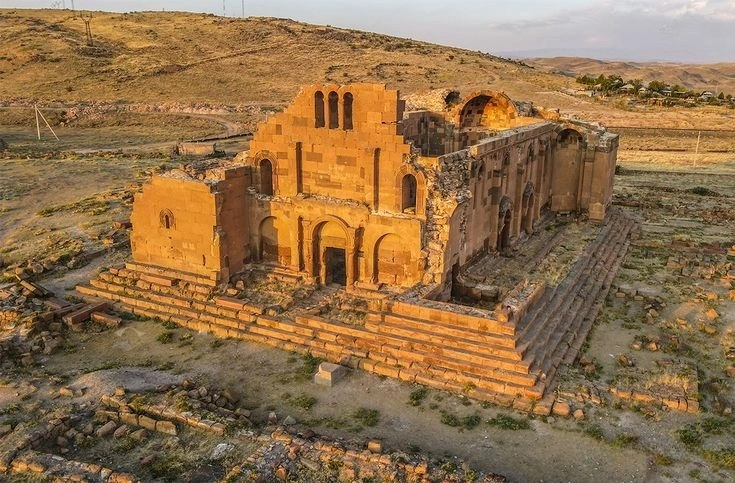
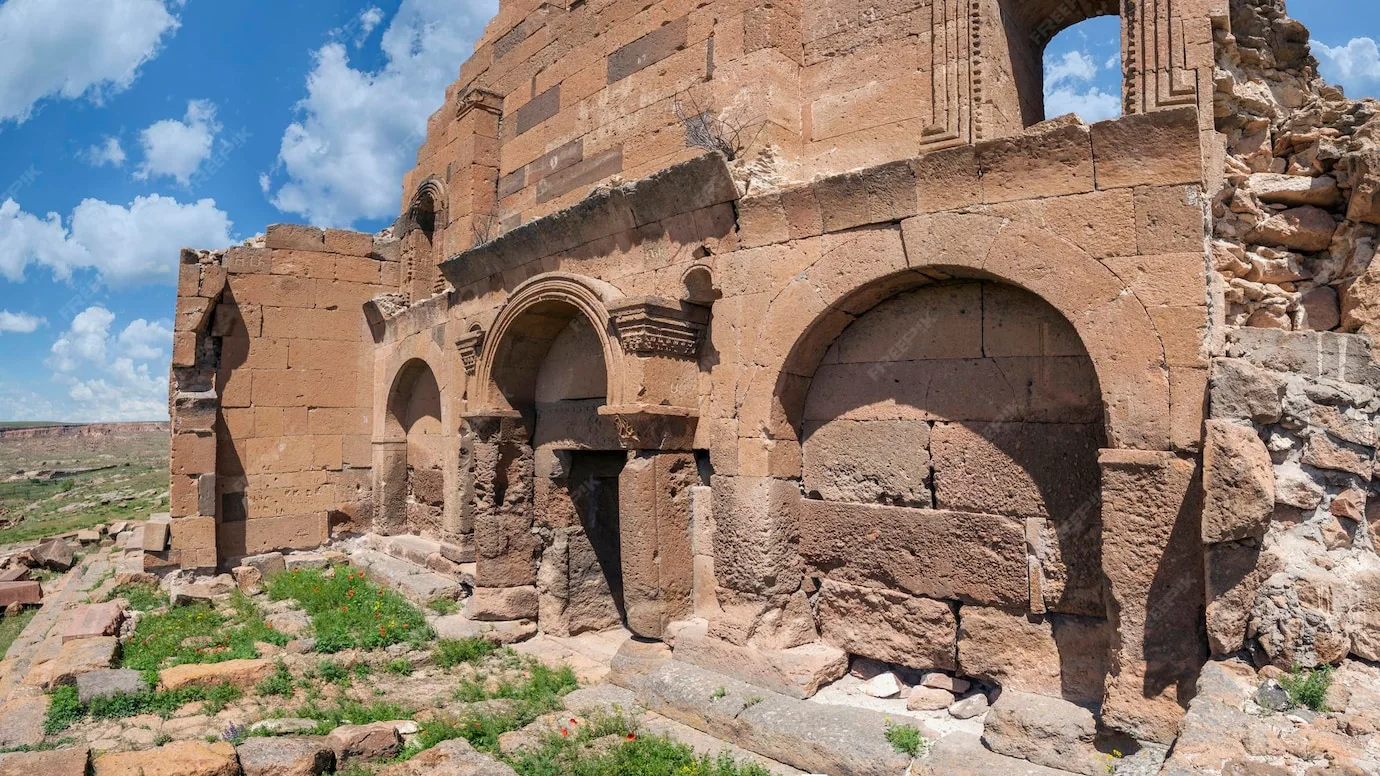
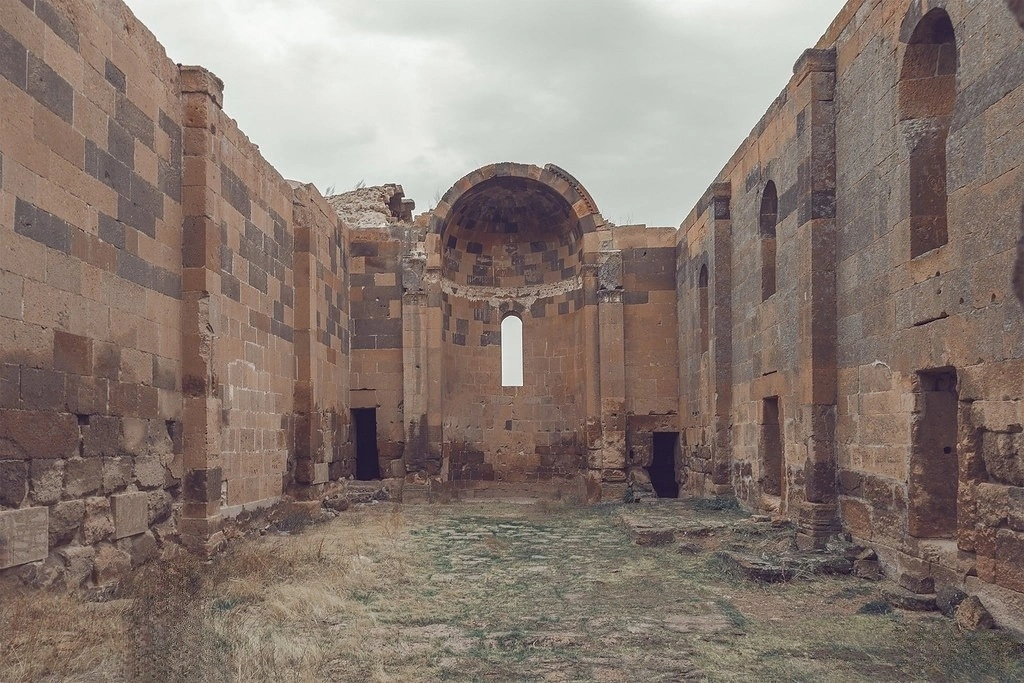
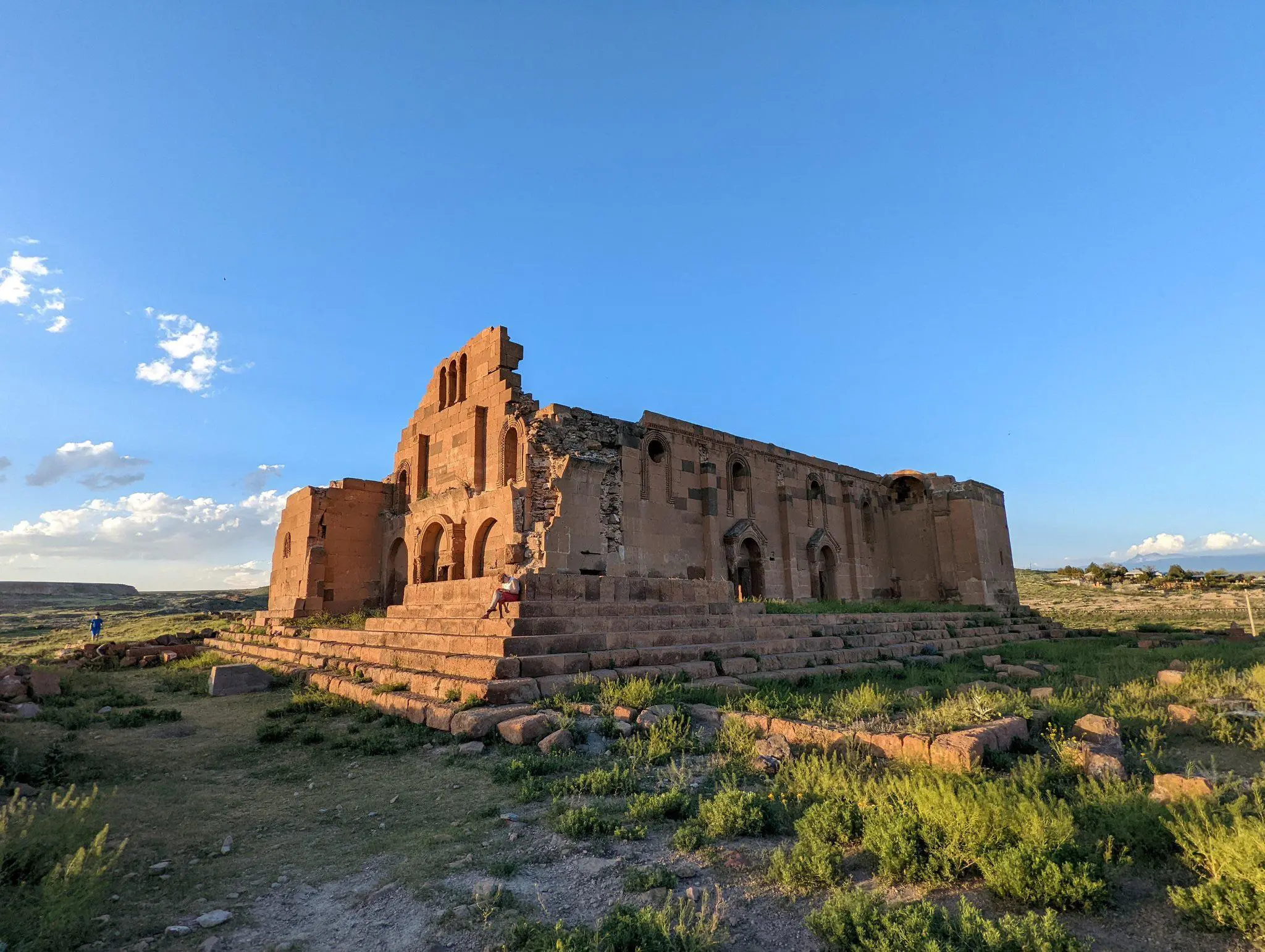
<p>The Yererouk Basilica is one of the oldest surviving monumental Christian churches in Armenia. It was constructed between the late 4th century and the early 6th century (approximately 380–520 AD), during the early period of Armenian Christianity that followed the country’s official adoption of the new faith in 301 AD. Its location on a high plateau near the Akhurian River reflects both symbolic and strategic choices made by its builders.</p><p></p><p>Architecturally, the basilica belongs to the three-nave basilica type, a form widely used in the Christian world of the 4th–5th centuries. Unlike later Armenian churches built after the 7th century, Yererouk does not include a central dome. Instead, its long rectangular plan, rows of columns, and emphasis on horizontal space reflect an early stage in the development of Armenian sacred architecture. The structure was built from local tuff stone and placed on a raised stylobate, a feature that gave the building a sense of lightness and may have inspired its name</p><p>.</p><p>Archaeological evidence suggests that Yererouk functioned as an important religious center from the 5th century through the early medieval period (up to the 9th–10th centuries). Burial grounds discovered around the basilica, including graves of infants, indicate that the site was associated with baptismal and commemorative practices over several centuries.</p><p></p><p>The decline of the basilica likely began after the 10th century, as regional political changes and natural disasters affected settlement patterns in Shirak. Repeated earthquakes, including major seismic events recorded in medieval Armenia, contributed to the collapse of the roof and upper structures. By the late Middle Ages, Yererouk had ceased to function as an active church.</p><p></p><p>In modern times, the basilica has been recognized for its historical value. In 1995, it was included in UNESCO’s Tentative List of World Heritage Sites. Archaeological studies conducted during the 20th and early 21st centuries have focused on documenting the monument and stabilizing its remaining structures.</p><p></p><p>Today, Yererouk Basilica stands as a rare architectural witness to the 4th–6th centuries, marking the transition from classical building traditions to the uniquely Armenian church architecture that would fully emerge after the 7th century.</p>

Attraction of Armenia
Yererouk Basilica