
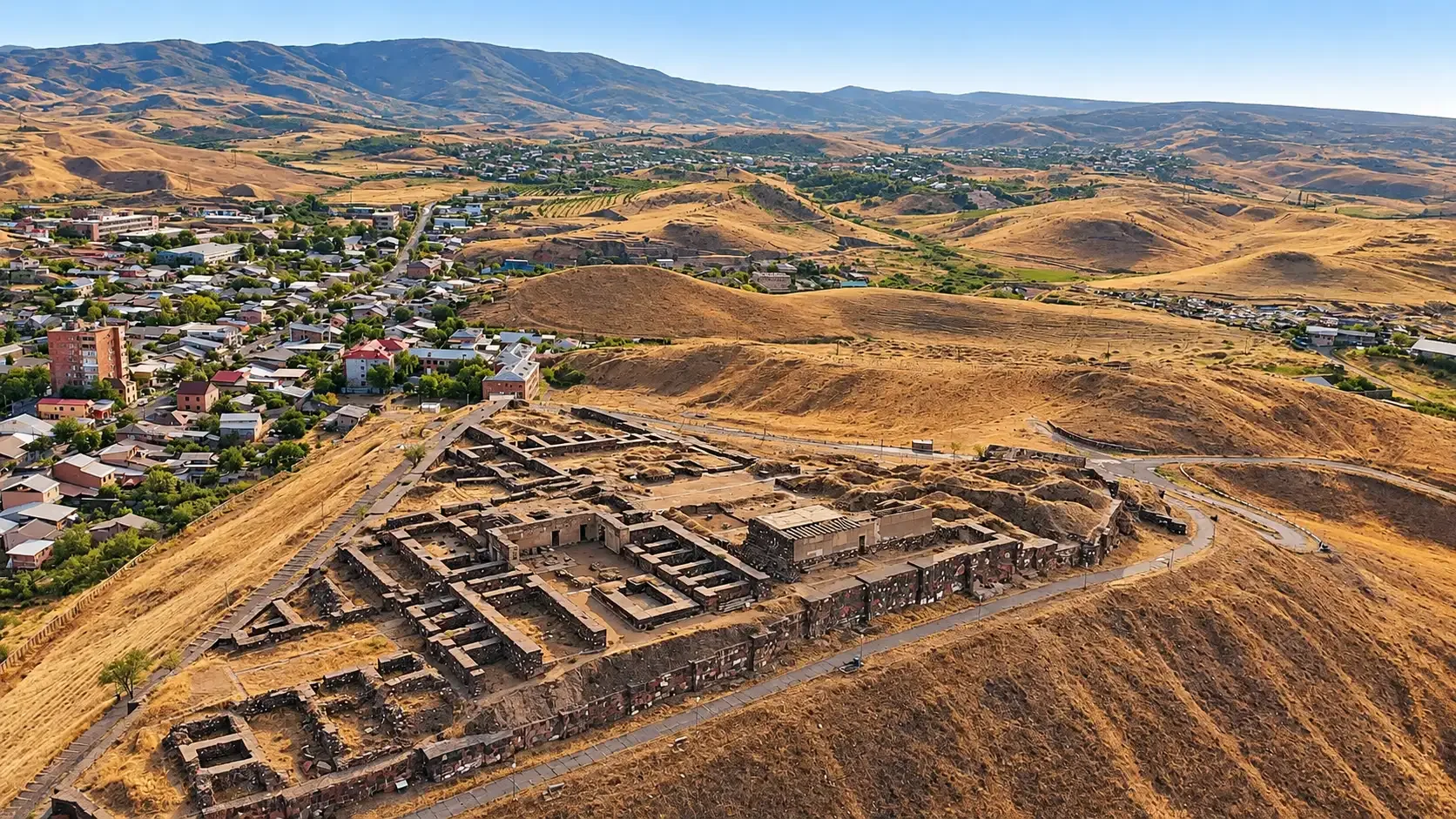
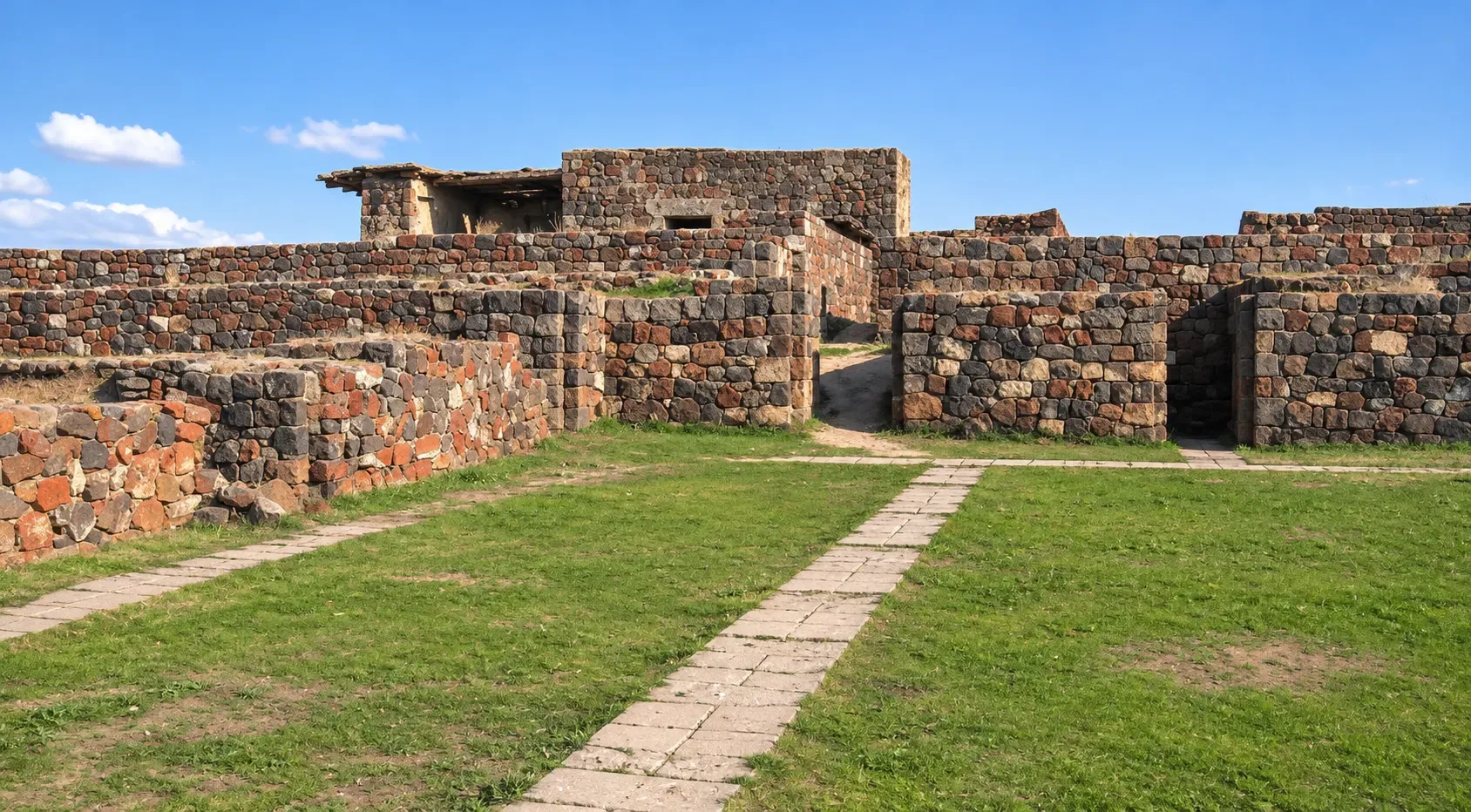
Erebuni Fortress is one of Armenia's most significant historical and archaeological monuments, located on Arin Berd Hill in the southeastern part of Yerevan. Founded in 782 BC by King Argishti I, ruler of the ancient Kingdom of Urartu, the fortress became an important military, political, administrative, economic, and religious center of its time. The founding of Erebuni traditionally marks the beginning of Yerevan's history, making it one of the most important symbols of the Armenian capital.
In the 8th century BC, the Kingdom of Urartu was one of the most powerful states of the Ancient Near East. Its territory covered a considerable part of the Armenian Highlands, and its rulers sought to expand their domains and strengthen strategically important territories. King Argishti I, aiming to consolidate Urartian influence in the fertile Ararat Valley, decided to establish a new fortress on elevated ground, offering a wide view of the surrounding lands. Thus, Erebuni was founded in 782 BC.
The foundation of the fortress is confirmed by a remarkable cuneiform inscription discovered by archaeologists. In it, King Argishti I announces the construction of the fortress and emphasizes its importance to the power of the Kingdom of Urartu. This inscription is one of the most significant historical records associated with the origins of Yerevan. The name Erebuni is historically connected to the modern name of the city, Yerevan. As a result, the fortress occupies a special place in the history of the Armenian capital, serving as tangible evidence of its ancient origins.
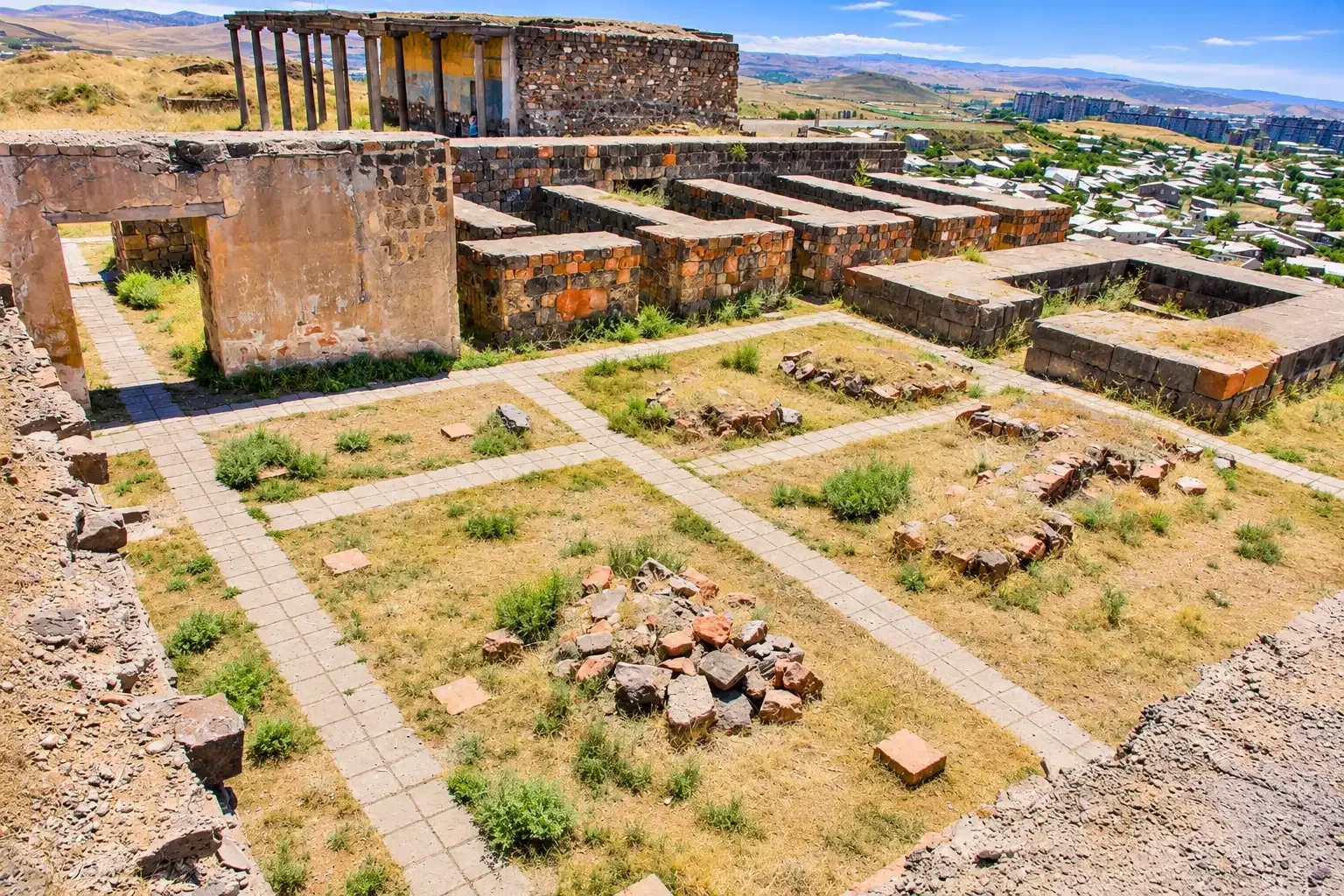
Erebuni was constructed according to the natural features of the surrounding landscape and the requirements of military defense. Arin Berd Hill provided natural protection and allowed the inhabitants to monitor a considerable part of the Ararat Valley. The fortress complex represented a carefully organized architectural system consisting of massive defensive walls, inner courtyards, royal and administrative buildings, religious structures, residential areas, and auxiliary facilities.
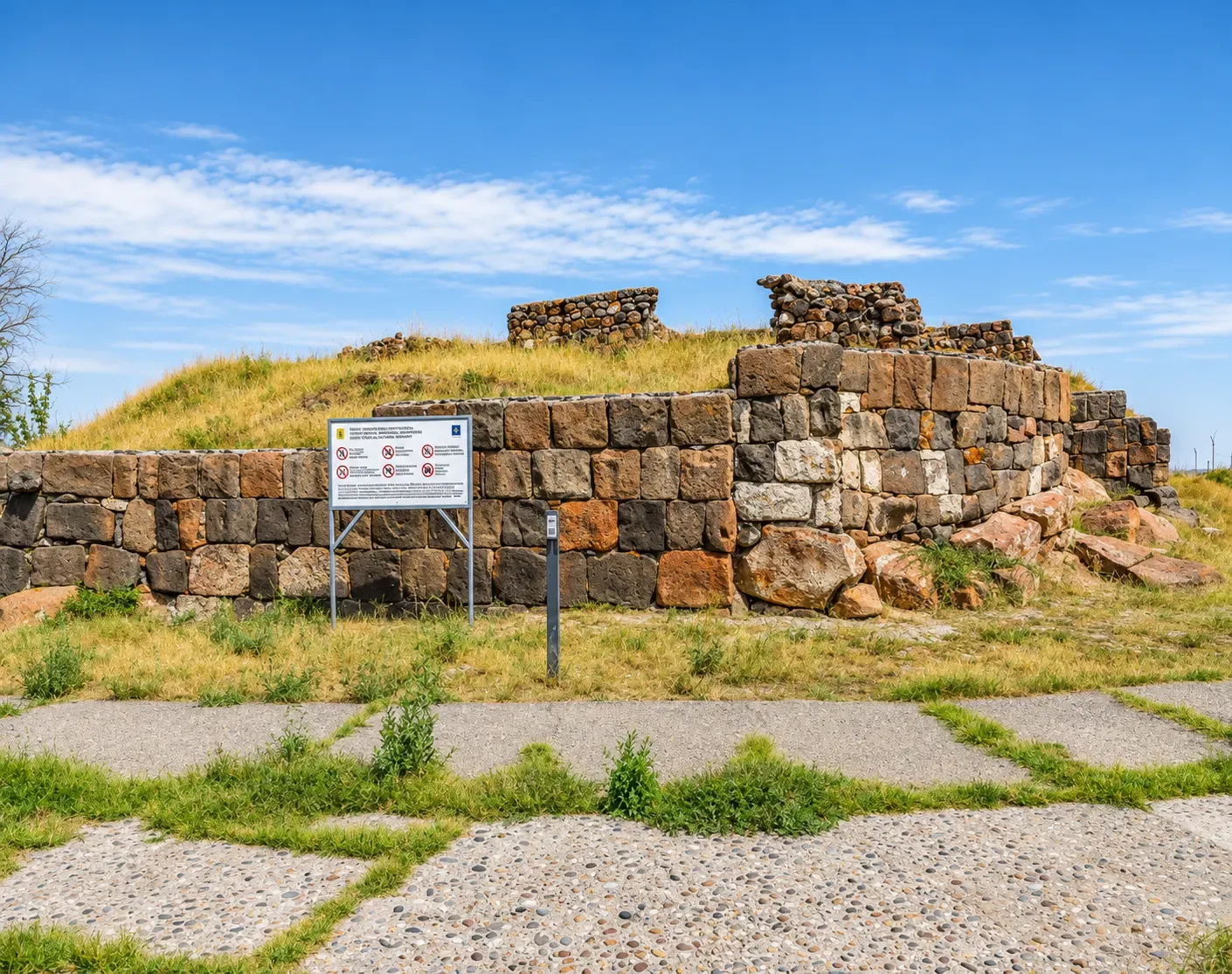
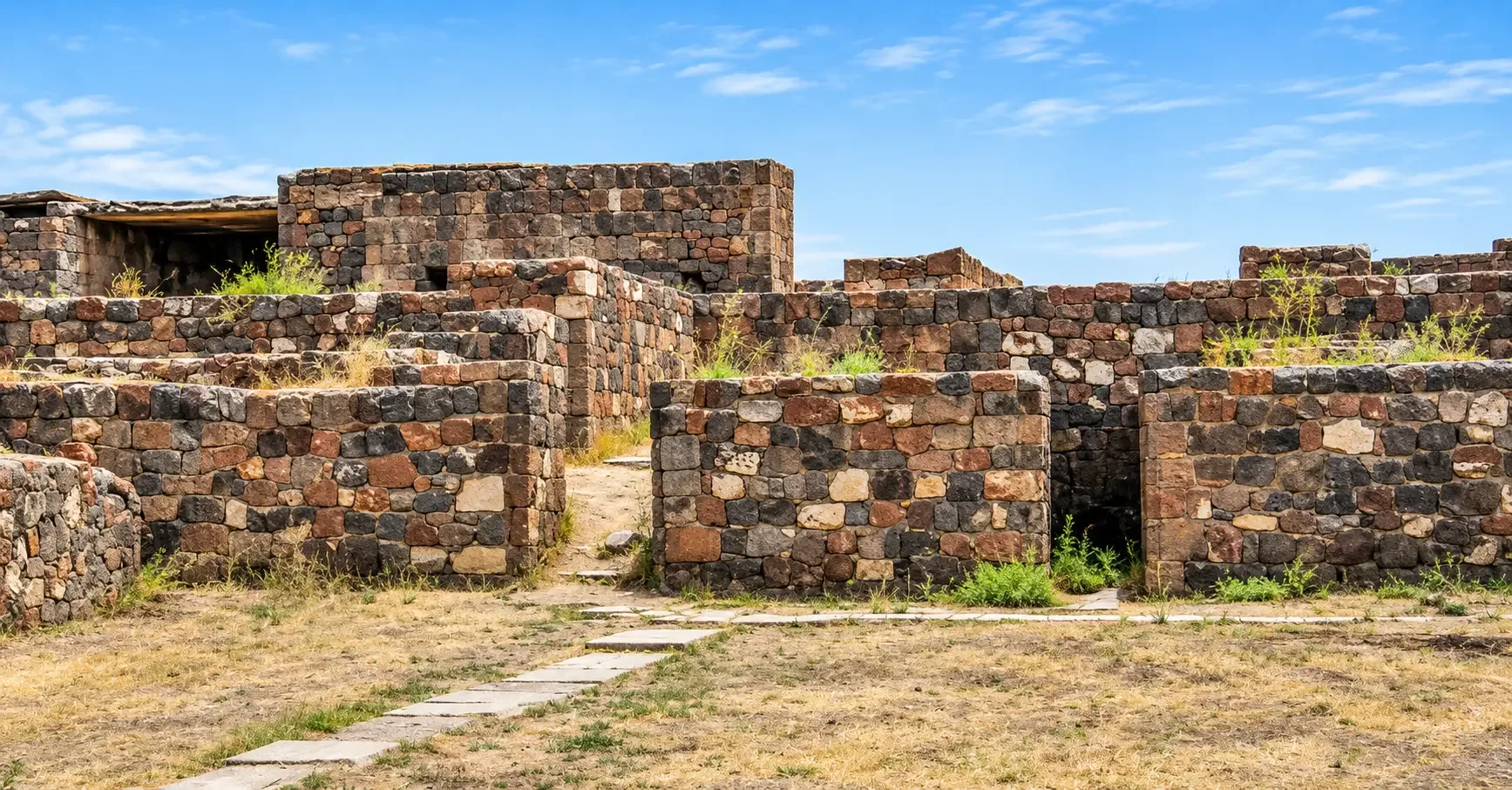
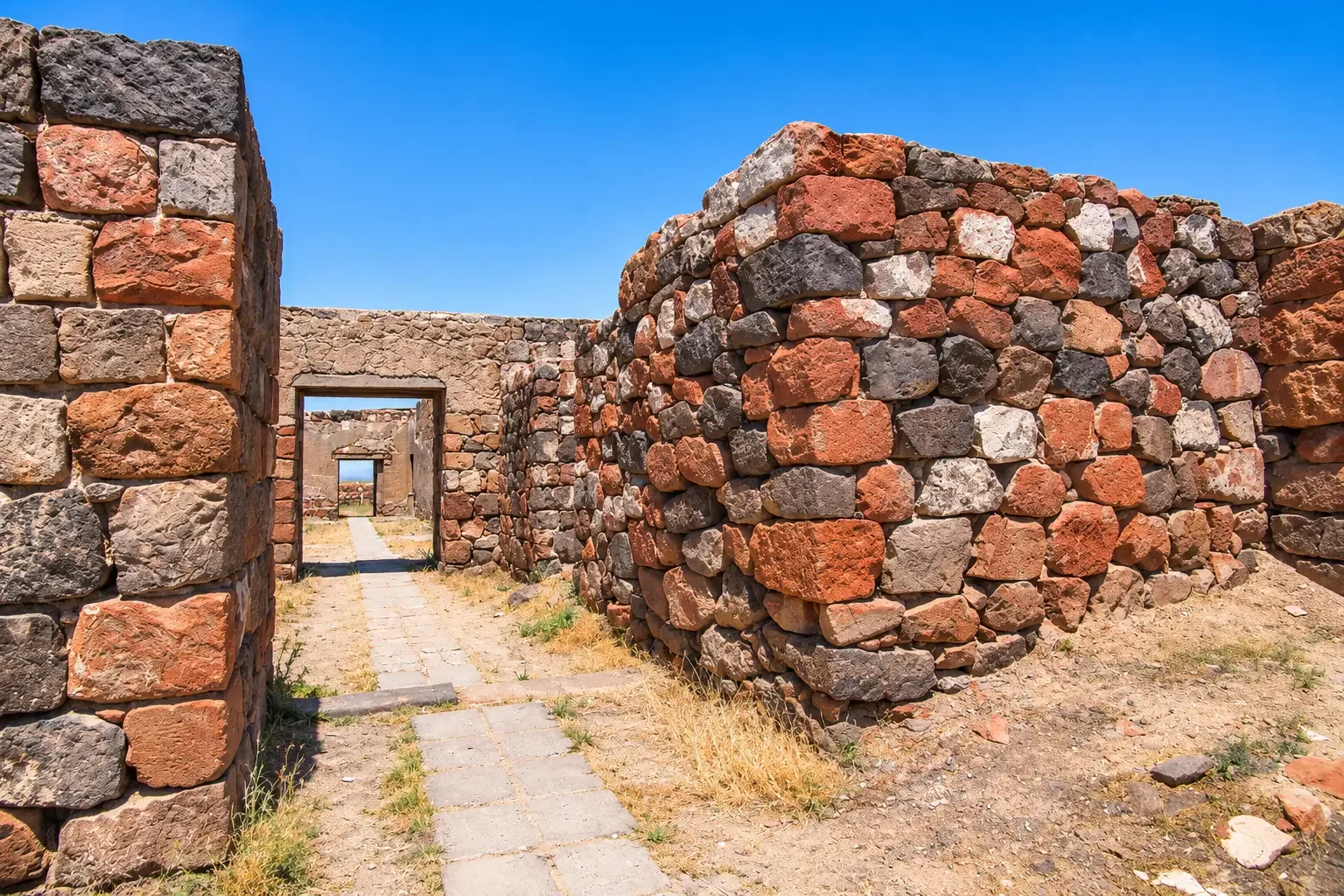
The foundations of the walls were built using large stone blocks, while the upper sections were constructed primarily from mud bricks. This building technique was characteristic of Urartian architecture. The interior of the fortress was divided into functional areas. It contained rooms for government officials, military personnel, religious servants, and other inhabitants of the fortress. Particular attention was given to food storage and the organization of economic activities. The architecture of Erebuni demonstrates the advanced engineering knowledge, construction techniques, and urban planning skills of the ancient Urartians.
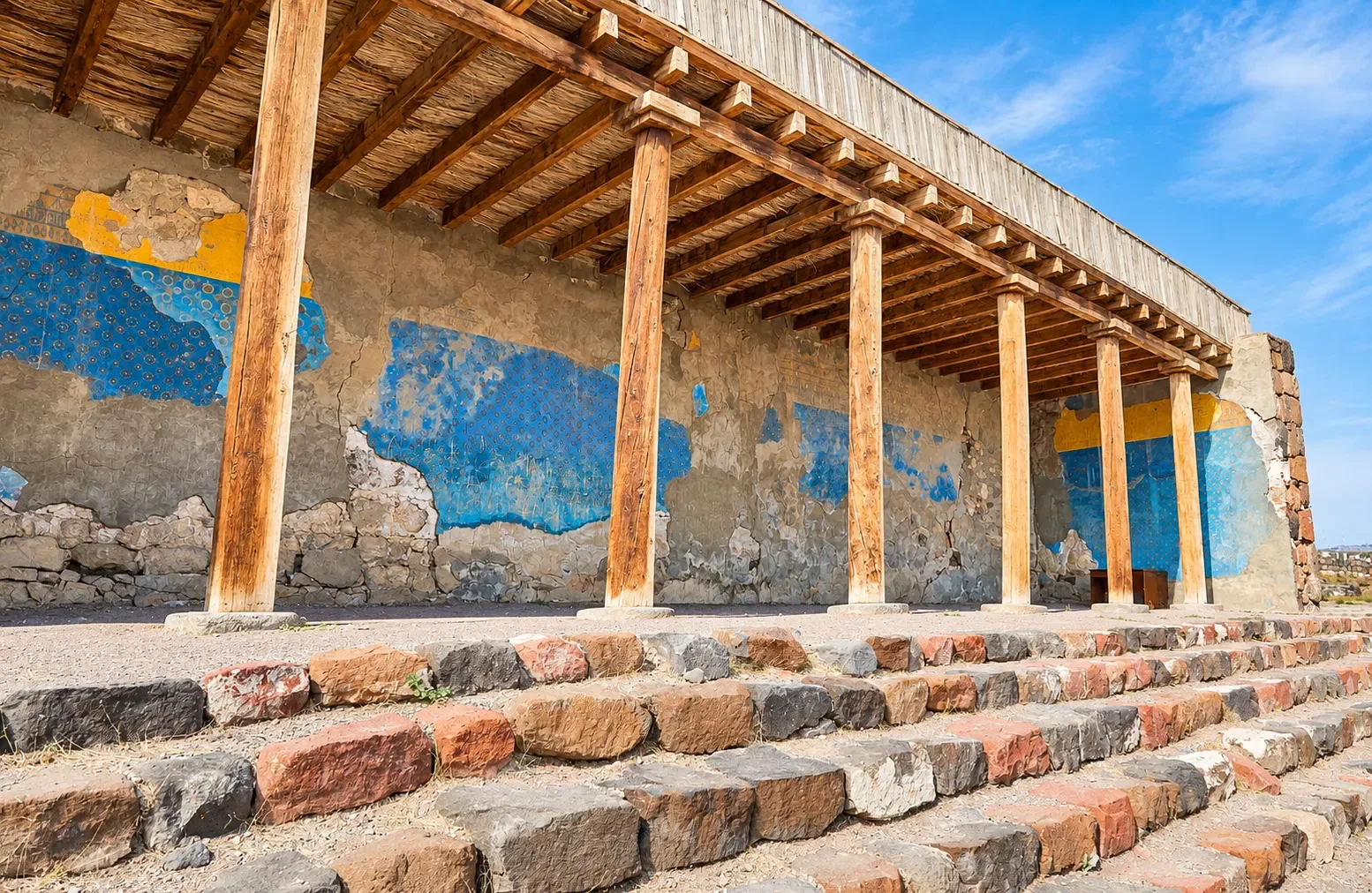
One of the most important parts of the fortress was its religious complex, dedicated to the god Khaldi, the principal deity of the ancient Urartian pantheon. Khaldi was regarded as the protector of the state, royal authority, and military power. His worship occupied a central place in the religious life of Urartu. The Temple of Khaldi was an important religious structure, distinguished by its characteristic architecture and richly decorated interior. Its walls were adorned with colorful paintings, while its rooms were used for religious ceremonies and rituals. The religious complex also included the so-called Susi Temple, associated with another deity of the Urartian religion, Ivarsha. The presence of several religious structures demonstrates that Erebuni was not merely a military fortress but also an important spiritual center of the ancient kingdom.
The fragments of ancient wall paintings discovered at Erebuni are of exceptional historical and artistic value. These frescoes decorated the interiors of temples and palace buildings. They featured vibrant colors, elaborate ornaments, and a variety of images. The surviving fragments depict sacred animals, plant motifs, geometric patterns, religious symbols, and ceremonial scenes. The paintings featured rich shades of blue, red, yellow, green, and black. This decoration gave the interiors a ceremonial appearance and emphasized the importance of the buildings. These works of art provide valuable insight into the worldview, religious beliefs, and artistic traditions of the ancient Urartians.
Erebuni was not only an administrative and military center but also a place of active economic activity. Its inhabitants were engaged in agriculture, animal husbandry, craftsmanship, and various forms of trade. The favorable natural conditions of the Ararat Valley encouraged agricultural development. Irrigation systems were particularly important, as they supplied water to agricultural lands and supported food production. Archaeological investigations have uncovered numerous ceramic vessels, granaries, storage rooms, household objects, and other evidence of everyday life in the ancient settlement. Large vessels used for storing grain, wine, and other products demonstrate the development of food storage and supply systems. The fortress was also inhabited by members of the administrative and military elite, craftsmen, temple servants, and other groups of people.
Following the decline and eventual fall of the Kingdom of Urartu, Erebuni did not disappear from the historical life of the region. The fortress continued to be used during subsequent historical periods. Particularly important changes took place during the era of the Achaemenid Empire, which existed from the 6th to the 4th centuries BC. During this period, the architectural appearance of the complex underwent significant changes. Archaeological investigations revealed traces of new structures, including a palace complex with an apadana, a large ceremonial hall characteristic of Persian architecture and used for official receptions. Evidence of changes in the religious and cultural life of the fortress was also discovered. Consequently, Erebuni is significant not only as a monument of the Urartian period but also as an archaeological complex reflecting the historical development of the region across several different eras.
Although the first information about the archaeological significance of Arin Berd Hill appeared in the late 19th century, systematic archaeological excavations at Erebuni began in 1950. Armenian archaeologist Konstantin Hovhannisyan made a major contribution to the study of the site, leading extensive archaeological investigations. During the excavations, researchers discovered the remains of palace buildings, temples, defensive walls, storage facilities, ancient inscriptions, and numerous objects of material culture. One of the most important discoveries was the cuneiform inscription of King Argishti I, which confirmed the foundation date of the fortress as 782 BC. These archaeological findings made it possible to reconstruct a significant part of Erebuni's history and establish important details about its architecture, religious life, and economic organization. Many of the discovered objects are now preserved and displayed at the Erebuni Museum, allowing visitors to explore the history of the ancient city.
The historical significance of Erebuni Fortress is inseparably connected with the origins of the modern Armenian capital. The establishment of the fortress in 782 BC is traditionally considered the official starting point of Yerevan's history. For this reason, the city celebrated its 2,750th anniversary in 1968. Erebuni became not only an archaeological monument but also an important symbol of Yerevan's historical continuity. In 1968, the Erebuni Historical and Archaeological Museum-Reserve was established to preserve and study the region's ancient heritage. Today, the museum-reserve encompasses several important archaeological sites, including Erebuni Fortress, the ancient fortified city of Teishebaini (Karmir Blur), and the prehistoric settlement of Shengavit.
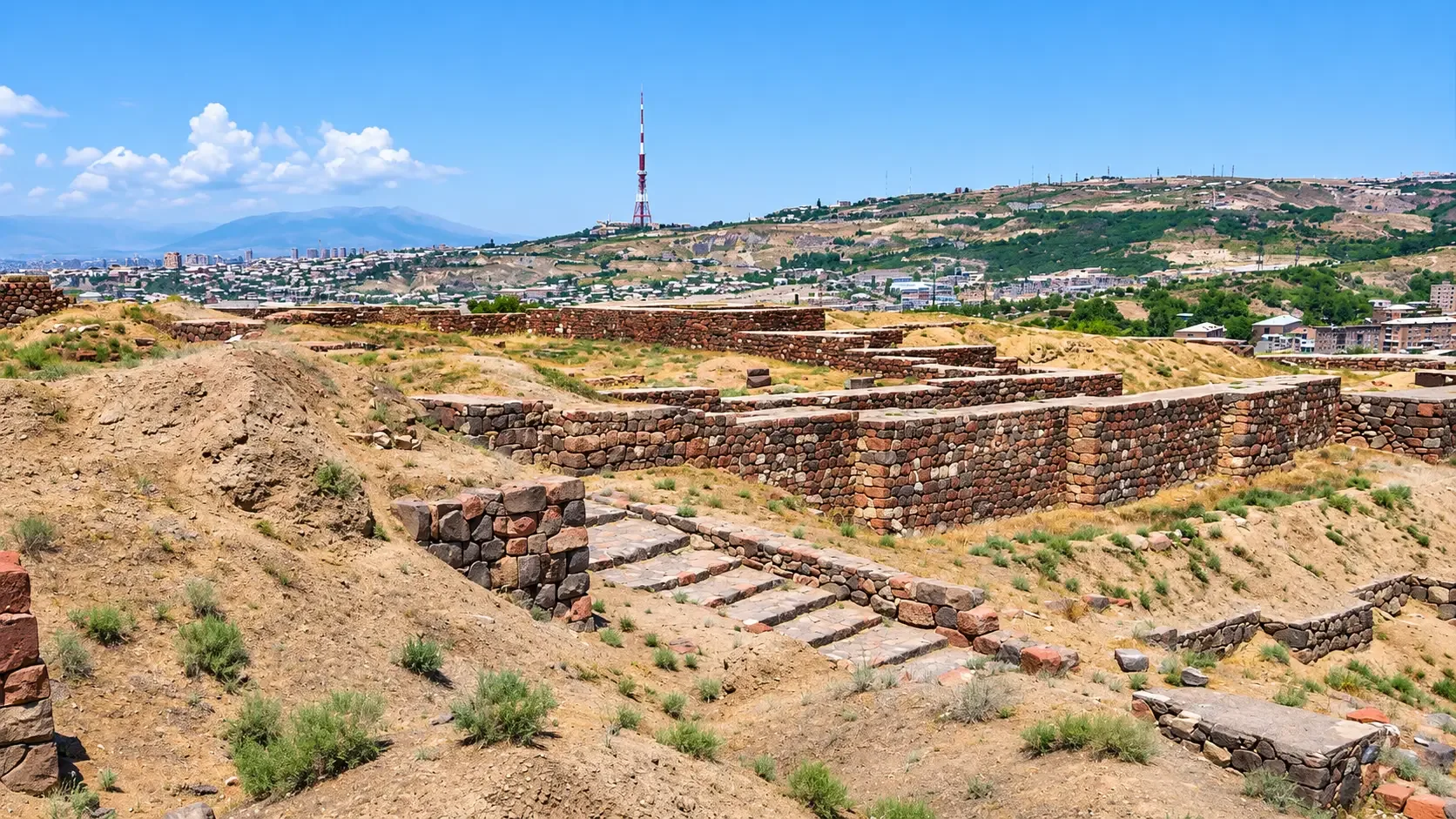
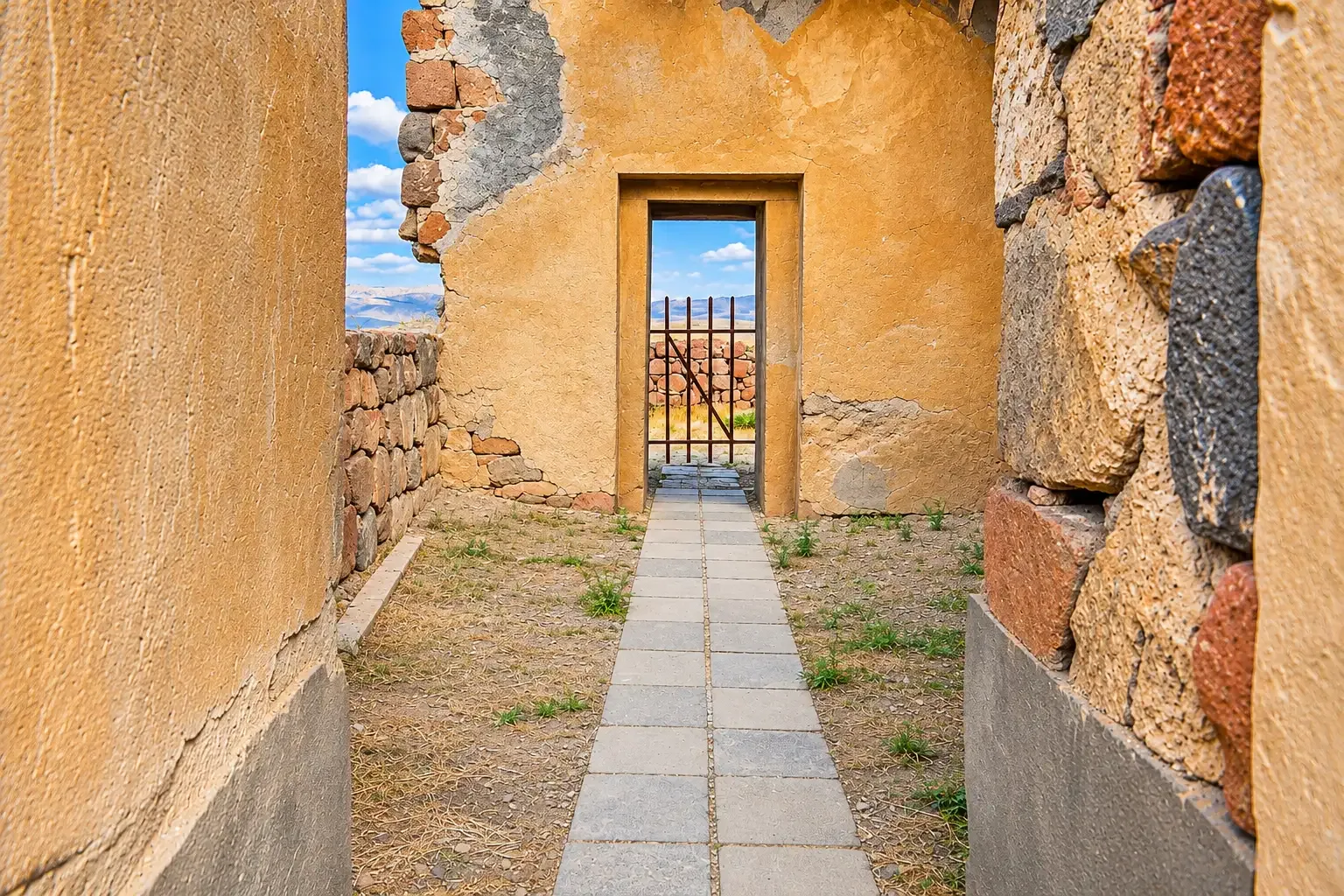
Today, Erebuni Fortress is one of Yerevan's most important historical attractions and a valuable monument of the ancient Urartian civilization. Visitors can explore surviving sections of the ancient defensive walls, the foundations of palace and temple structures, the remains of interior rooms, and other archaeological features. Its location on Arin Berd Hill offers picturesque views of Yerevan and the surrounding Ararat Valley. This remarkable location allows visitors not only to discover the history of the ancient city but also to admire the modern Armenian capital from a unique historical viewpoint.
Near the archaeological complex stands the Erebuni Museum, which houses unique exhibits related to the history of Urartu, the development of ancient architecture, religion, art, and the everyday life of its inhabitants. The historical heritage of Erebuni is significant not only for Armenia but also for the study of ancient civilizations throughout the Near East. The archaeological complex is included in UNESCO's Tentative List of World Heritage Sites as part of the property entitled "Urartian Heritage of Yerevan."
Erebuni Fortress is a remarkable testament to the ancient history of the Armenian Highlands, reflecting the political power, architectural achievements, religious traditions, and cultural development of the Kingdom of Urartu. Throughout the centuries, this historical complex has preserved the memory of ancient civilizations that left a significant mark on the history of the region. Erebuni is the place where the documented history of Yerevan begins, a symbol of Armenia's centuries-old cultural heritage, and one of the most important historical landmarks through which visitors can discover the origins of the Armenian capital.